> For the complete documentation index, see [llms.txt](https://doc.lockerprotocol.com/llms.txt). Markdown versions of documentation pages are available by appending `.md` to page URLs; this page is available as [Markdown](https://doc.lockerprotocol.com/browser-extension/install.md).
# Install the extension
Add the wallet to Chrome, Edge, Firefox or Safari and pin it.
**Locker Protocol Wallet** is a browser extension that works wherever MetaMask works, but holds no keys. Install it from your browser's store, pin it, and it opens in the side panel next to your web pages.
## What you need
* A computer with Chrome, Edge, Brave, Firefox or Safari.
* A webcam (built-in is fine).
{% stepper %}
{% step %}
### Open the store page
Search for **Locker Protocol Wallet** in the Chrome Web Store (Chrome, Edge, Brave), Firefox Add-ons, or the App Store (Safari). Check the publisher is **Locker Protocol**.
{% endstep %}
{% step %}
### Click "Add to browser"
Confirm the permissions. The extension asks for the **camera** (to read the Vault's QR codes), **storage** (to remember your watch-only accounts) and the **side panel**.
{% endstep %}
{% step %}
### Pin the icon
Click the puzzle-piece icon in the toolbar and pin **Locker Protocol Wallet**, so it is always one click away.
{% endstep %}
{% step %}
### It opens in the side panel
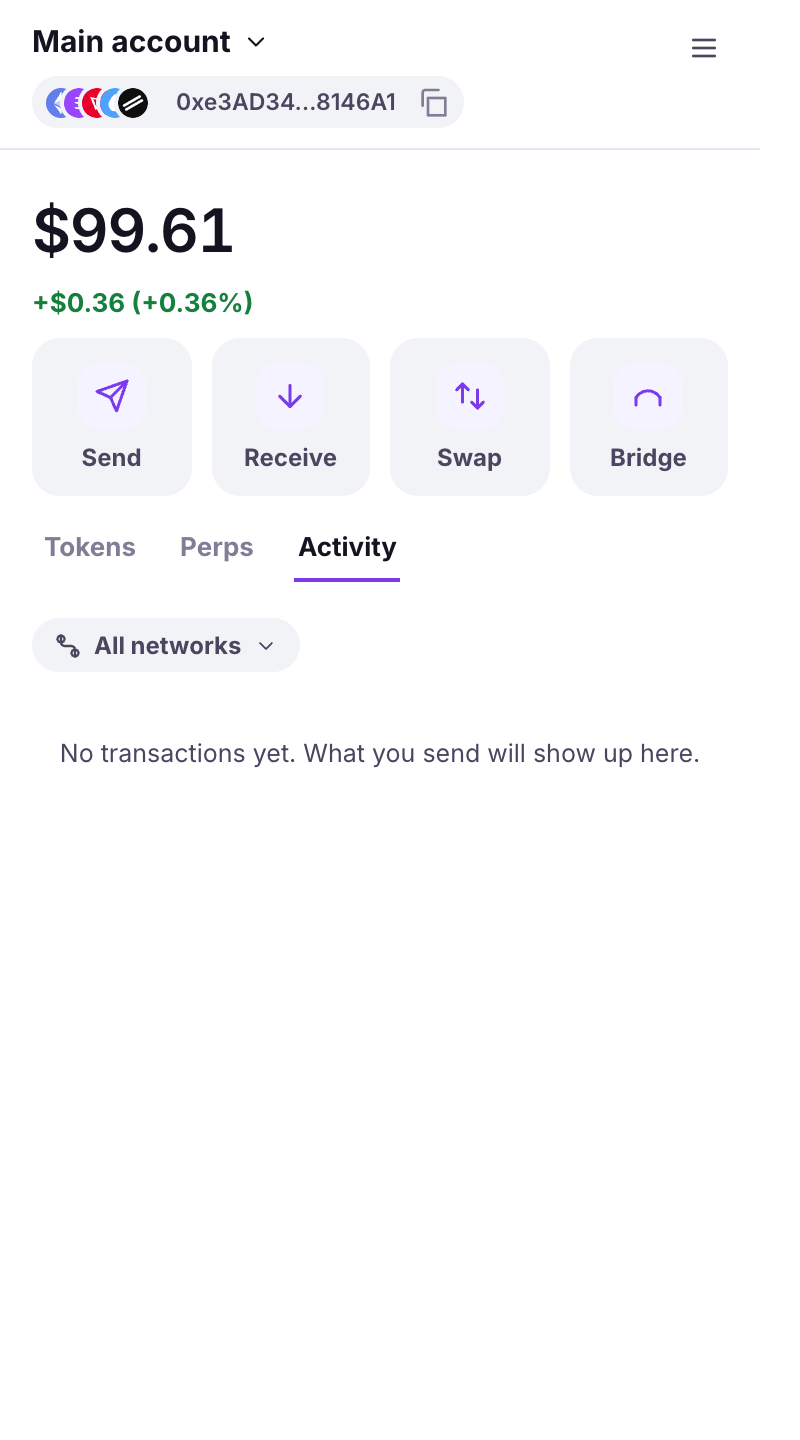
Click the icon. On Chrome and Edge the wallet opens in the **side panel**, a column beside the page that stays open while you browse. That is where the camera works best.
The wallet in the side panel.
{% endstep %}
{% step %}
### Popup mode (Firefox, Safari)
Browsers without a side panel open the wallet as a small popup. Everything works the same; for camera scans the wallet may ask you to **Continue in a tab**.
{% endstep %}
{% step %}
### First open
The first time, a full-page **onboarding** tab opens: accept the terms, scan your Vault, done. See the next page.
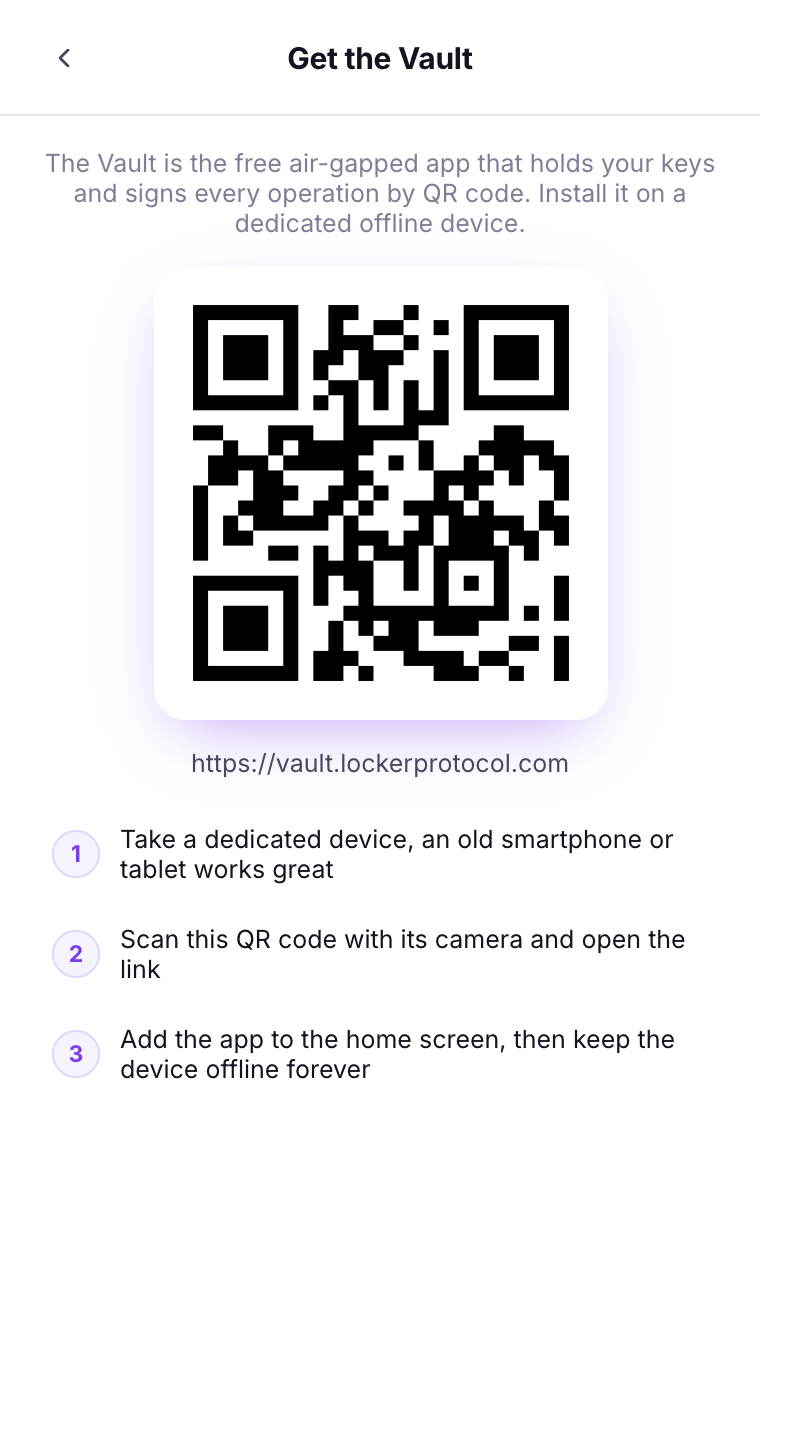
The Get the Vault screen, one tap from the first-run welcome.
{% endstep %}
{% endstepper %}
{% hint style="info" %}
**No Vault yet?** The welcome screen has **I don't have a vault yet** → **Get the free Vault app**. It shows the Vault's link as a QR code to scan with the phone you will dedicate to it. See [Install the Vault](/vault/install.md).
{% endhint %}
## Learn more
* [Onboarding](/browser-extension/onboarding.md)
* [Permissions the extension asks for](/reference/extension-permissions.md)
* [Reproducible build & verification](/reference/reproducible-build.md)
---
# Agent Instructions
This documentation is published with GitBook. GitBook is the documentation platform designed so that both humans and AI agents can read, navigate, and reason over technical content effectively. Learn more at gitbook.com.
## Querying This Documentation
If you need additional information that is not directly available in this page, you can query the documentation dynamically by asking a question.
Perform an HTTP GET request on the current page URL with the `ask` query parameter, and the optional `goal` query parameter:
```
GET https://doc.lockerprotocol.com/browser-extension/install.md?ask=&goal=
```
`ask` is the immediate question: it should be specific, self-contained, and written in natural language.
`goal` is optional and describes the broader end goal you are ultimately trying to accomplish on behalf of the user. GitBook uses it to tailor the answer towards what is most useful for that goal.
The response will contain a direct answer to the question and relevant excerpts and sources from the documentation.
Use this mechanism when the answer is not explicitly present in the current page, you need clarification or additional context, or you want to retrieve related documentation sections.